

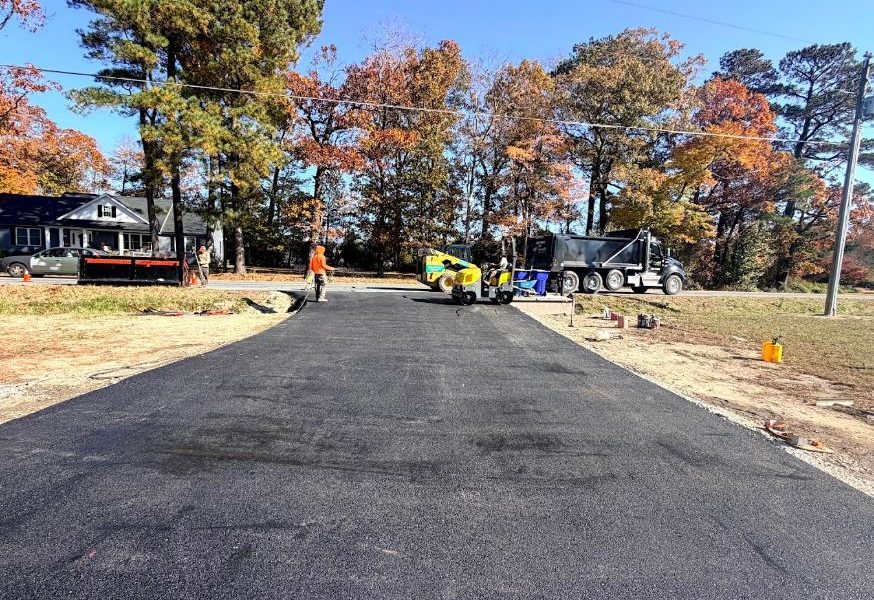
From grading and a compacted stone base to the final roll and curing, here is how a long-lasting driveway is built in Sussex and Kent County.
Quick answer: A durable asphalt driveway is built in four stages: excavate and grade, compact a stone base, lay and roll hot asphalt, then let it cure before heavy use. Most failures trace back to a weak base or poor drainage, not the asphalt itself.
Asphalt is a popular choice for Delaware homeowners because it installs quickly, handles freeze and thaw cycles, and costs less than many other paving options. The asphalt driveway installation steps below show what happens on a well-run job and which details protect your investment.
The four stages at a glance
1. Excavate and grade
Remove soft soil, set the slope, and plan where water will go.
2. Build the base
Spread crushed stone in layers and compact each one.
3. Pave and roll
Place hot asphalt, then compact it with a roller until smooth.
4. Cure
Keep vehicles off while the surface hardens and cools.
Stage 1 and 2: Excavation, grading, and the stone base
The base carries the weight of vehicles, so it gets the most attention before any asphalt arrives. Crews strip topsoil and any soft or organic material, then set the grade so water runs off the surface and away from the house. Even a gentle, consistent slope prevents puddles that soften the edges over time.
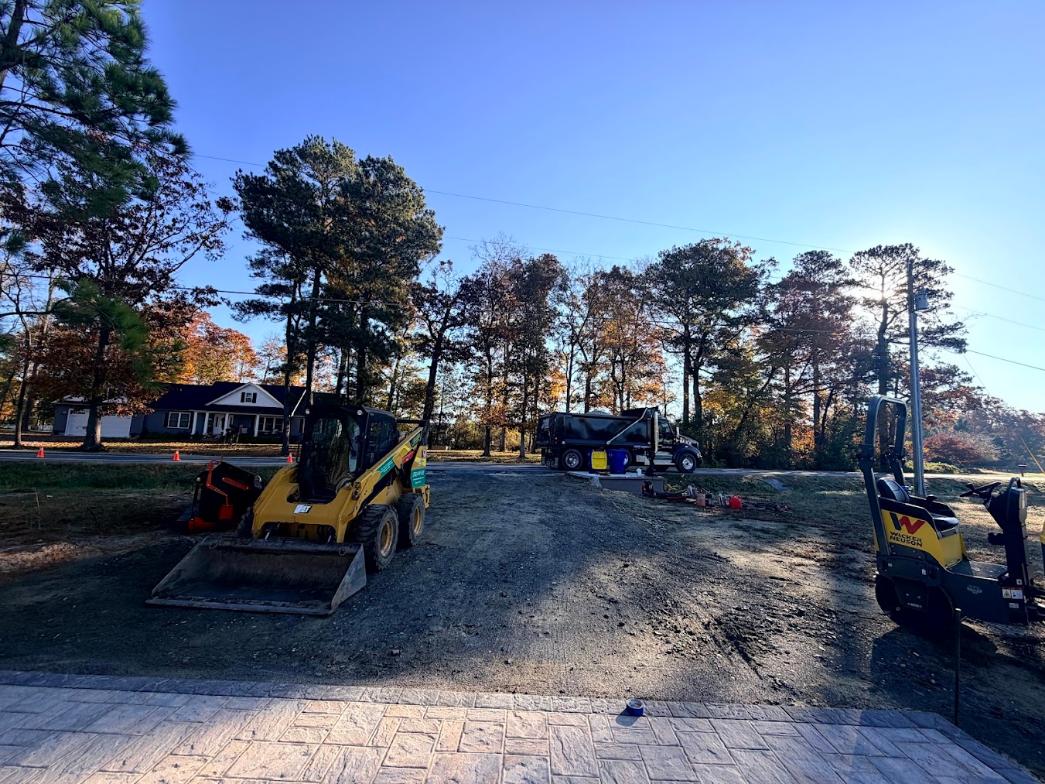
Crushed stone goes down in lifts, with each layer compacted by a plate compactor or roller. A residential base is commonly several inches thick and is sized to the soil underneath. Sandy ground in much of Sussex County drains well, but it still needs firm compaction to stop the surface from settling.
When excavation or leveling is part of the job, a dedicated excavation service keeps depth, slope, and spoil removal under one plan.
Edge detail: where the driveway meets a paver apron, walkway, or lawn, the base should extend past the asphalt edge so the outer foot of pavement is fully supported.
Stage 3: Laying and rolling the asphalt
Hot-mix asphalt is delivered by dump truck and spread to a uniform thickness, typically 2 to 3 inches for a home driveway. A roller then compacts it while it is still warm. Timing matters: asphalt that cools before it is rolled stays porous and wears faster. Crews work steadily from one side to the other so the seams are tight and the surface stays even.
- Smooth joins where the driveway meets the street apron
- A slight crown or slope so water leaves the surface
- Clean, straight edges that match the planned layout
For the full scope of this work, see our driveway asphalt paving page. If you prefer a decorative look at the entrance, a paver border or apron can be paired with asphalt, and our driveway pavers show those options.
Stage 4: Curing and early care
Fresh asphalt hardens as it cools. Heat softens it, so summer jobs need more patience than fall or spring installs.
| Timing | What to do |
|---|---|
| First day | Keep all vehicles and foot traffic off the surface. |
| 2 to 3 days | Light vehicles are usually fine in cool weather; wait longer in heat. |
| First weeks | Avoid turning wheels while parked, and keep heavy trucks off. |
| First summer | Do not park in one spot for long on very hot days, and avoid kickstands. |
| 6 to 12 months | Allow the surface to cure fully before applying any sealcoat. |
Your installer’s guidance for your specific mix and weather comes first, but these timelines give a realistic starting point.
Frequently asked questions
How thick should a residential asphalt driveway be?
Two to three inches of compacted asphalt over a properly built stone base is a common standard for cars and light trucks.
What season is best for paving in Delaware?
Spring through fall, when temperatures are mild and asphalt plants are producing hot mix reliably.
Why do some asphalt driveways crack early?
Weak or uneven bases, standing water, and thin asphalt are the most common causes.
Can asphalt be installed over an old driveway?
Sometimes, if the old surface and base are sound. A crew should inspect the driveway before recommending an overlay or a full replacement.
Planning a new driveway?
Armando’s Hardscaping builds asphalt driveways, paver aprons, and walkways across Georgetown, Millsboro, Lewes, Selbyville, Felton, and Milford, DE.